Showing posts with label vocation. Show all posts

Friday, November 30, 2007

What's Next?

A few friends and kind readers have asked me about my plans now that I've finished my M.Th. I've been thinking about a lot of different things, but here's the outline...

I really enjoy what I do at the bookstore, and the people with whom I work. While I didn't get the marketing position I wanted, I have been given leave to plan and execute at least one author event that I've been pushing for.

The work that I do with the people of Saint Patrick's Church is very important to me, and I'm working on two long term projects in Christian education and formation.

The first project is to design a standard program of Anglican catechesis and introduction to Saint Patrick's Church. St Pat's receives a lot of interest from folks who have come from evangelical protestant denominations, and while they might have been away from the life of any church for months or years, there's still an element of "culture shock" when people are introduced to our liturgy and philosophies of ministry. While we can't make the life of our parish less weird (because we are convinced that it's weird in a good way) we can take people aside to welcome them, answer questions, and provide a basic introduction to Anglican Christianity and its peculiar grammar so that folks will have the theological tools to "read" and therefore better understand what's going on in the life of our parish. We'd like this to be a four week, informal class that we provide 3-4 times a year, as needed. I hope that after a year or two of this, we'll have some well-formed Anglo-Catholics running around the place. Ahem.

The second project is going to be less work but a lot harder: our household is getting together with some other folks in the parish to learn what it's like to share life and a common Rule together with people of different interests and demographics, but who are interested in friendship, monastic practices, and learning to love our Lord better. I'll write on that as it progresses.

Would you believe that it sounds to some folks like I'm a drifter, since I don't have a salary, a title, or an ordination planned?

I won't have a fancy title (unless Father Matthews deigns to give me one) and it's not going to be lucrative. I still have a closet full of fancy dress clothes that I'm not using at the moment. This will not put me on the fast track to the priesthood. But here's the thing: I'm not looking to be a CEO in the Kingdom of God. This is not a matter of "climbing the corporate ladder" - I'm a layman of the Church of Rwanda, so there is no bloody ladder. A friend reminded me this week that there are plenty of people in plenty of churches who have heard a call to ordained ministry, and want to get themselves put into that ontological category ASAP so they can go about the "real ministry" that they're called to do. Right here and now, however, this is the very real ministry that I'm called to do: help build the life of the Church, learn to be a better penitent, and to call other sinners to turn to Jesus and engage fully in the life of God's new Community, and participate now in the life of the world to come. I don't need to be ordained simply to do that. I'm still thinking about priesthood, but any formal process for that really needs to be on the back burners right now, because more important than any institutional process is the question of my own formation in holiness and the life of Christ's Church. Our God has much to do in and with me, and I want to bend my body such that by the time somebody lays hands on me to make me a priest, I have already been formed into the kind of man who should be a priest.

Forming character is like preparing a roast - if you try to do it fast, you end up with something other than you were hoping for.

Monday, November 20, 2006

Wacky Episcopalians

Ordinary Time

Oh, no she didn't. Amy Welborn: "An interview that will go down in infamy." It's about Heresiarch Kate's interview in the New York Times Magazine. And the papists are pissed...

It reminds me of what our brother Stan said about making a "fetish of the family," but on the other side. The thing is, I've known many Episcopalians who are very excited about Baptists becoming unenthusiastic mainline Christians, but don't have the foggiest notion how or why anyone would convert to Christianity as such.

Oh, and Stan's point in a nutshell was this: when Christians make a fetish of the family - growing it, "protecting" it - as some kind of end in itself, that's how you can tell they don't believe in God anymore, because Christians believe that God expands and renews the Church by conversion. However, what if you're an Episcopalian and you don't care for reproduction or evangelism...? I guess you lose a million members in 20 years...

Update: Oh, wait, there's more...

Technorati Tags: ,

Thursday, May 25, 2006

Priesthood

Ascension Day

Hello, dear friends! For my "experiential" module, I'm going to examine how the concept of a ministerial priesthood is worked out in my faith community - one or both of them, anyway. In order to do that, I need to have some kind of theological notions of the pastorate and/or priesthood. Can anyone suggest to me some good books on the spirituality and theology of, and formation for, the priesthood or pastoral office? Feel free to suggest titles from catholic/anglican, orthodox, or protestant perspectives; it would be helpful for me to check out a broad number of things, since real people (in this crazy, mixed up post-modern world) aren't always wholly dealing with a protestant or catholic understanding of ordained ministry.

Technorati Tags: ,

Monday, January 23, 2006

Toward the Theology and Practice of Celibacy

3 Epiphany
2nd Hilary

Alright, it's second week already, and I have so much to do. Been having some provocative talks with my community - provocative for me, anyway. So look for this space to get... controversial... this week. In the meantime, consider my final post on celibacy here...

I've already stated that if celibacy is anything, "it is a positive way of blessing, hallowing and consecrating the flesh." I think I’ve found a helpful interpretive key for building this theology and practice of holy celibacy:

Genesis insists that it is not good for man to be alone. This is one of the things that makes marriage good. If celibacy is also good, and a gift and call from God, it cannot mean being alone in the sense that the Trinitarian god fretted over in the first chapters of Genesis. Marriage is good. Celibacy is good. It is not good to be alone. If we can really say yes to God by joining him in those statements and build our life as the people of God accordingly in the way we pray, study, and break bread, we’ll be doing a good work.

Any thoughts?

Thursday, January 19, 2006

Obstacles to a Theology of Celibacy

2 Epiphany
1 Hilary

As long as our communities do see celibacy as some kind of second-best thing, rather than an equivalent expression of sexuality with its own unique gifts and challenges (like marriage), we are left saying that “single people” are indeed “damned” to celibacy. Note that “single” is not a word I have used or will use in this discussion, because none of us are called to be single. We are baptized to be deeply involved in God’s new community. Biological family units are only subsets of that community; they aren’t meant to serve as relational boundary lines.

One thing that this does make really clear is the foolishness of singles ministry: the horror is that they see the problem but present the wrong solution: the life of the community is meant to flow from and provide support for the whole people of God in a diversity of vocations, and that the nuclear, "natural" (or blood) family is not a primary unit in the church. As Ben Witherington and others like to remind us periodically, the family is taken into the life of God in the Church and redeemed. In the same way that the presence of family relationships are not meant to ultimately define one's place in the community any more than their absence. To endorse “singleness” rather than celibacy is self-defeating.

So while I don't like how churches teach so much and write so many books on "how to have a happy and godly marriage" - I think they'd do better to ground people constantly on their identity together in Christ and as the Church - it means that we need to explore and discuss and teach both how to live as married people, and how to live as celibates. And of course, since it is the Roman Catholic Church that has maintained celibacy as a valid vocation, they have much to teach us.

Tuesday, January 17, 2006

Celibacy as “Space for God” : Building Blocks for a Theology

2 Epiphany
1 Hilary

In the New Testament, both marriage and celibacy are considered vocations that manifest the love of God in particular ways. I’d like to reference some works by Henri Nouwen and Rowan Williams that bring out the nature of celibacy as both testimony to and manifestation of God’s presence.

I consider celibacy to be a way of “making room” for the presence of God. Remembering that healthy relationships always have some manner of boundaries, I’d like to suggest that in the life of any person, there are public and private “spaces” – areas of the soul that are meant to be shared by friends, areas for a mate, and some parts that are private, where God alone is invited to dwell. (Not that God is always invited!) Whatever those spaces might look like, those parts of our lives are something we owe to one another in love and service. Our friends have a certain claim on us because of our baptism and shared life in the Church. (I write about this often.) Our spouses would have another kind of claim, while there is other space that is for God alone, consecrated to him. Celibacy would mean that a significant part of our “space” is reserved for God alone, to the exclusion of other persons. That is not “holy” as opposed to “unholy” but a particular kind of holiness.

I don’t have it to hand, but I think I was thinking along these lines after reading from J.M. Henri Nouwen’s Clowning in Rome.

In his essay, “Resident Aliens: The Identity of the Early Church” (In Why Study the Past? The Quest for the Historical Church, The Sarum Theological Lectures, London: Darton, Longman and Todd, 2005, 32-40)” Rowan Williams describes vocational celibacy as the successor to martyrdom as a channel for God’s presence and power in the community.

Christian identity was understood in terms of both affirmation and negation: Jesus is Lord and Caesar is not, and the ekklesia (“public assembly”) of “resident aliens” (a common phrase in the early Christian letters) consists of a people who owed their citizenship and ultimate allegiance to a Kingdom other than Caesar’s Empire. While the roman civic cult was pleased to add some gods and practices, Christian religion was exclusive: the believer belongs to God alone, and so does not participate in many aspects of civic life. Martyrdom bore witness to the power and ownership of God that made the Christian community distinct, and was a channel of that power. This is why the letters of Ignatius and the Martyrdom of Polycarp are pleased to use Eucharistic language to describe their deaths:
The martyr consecrates his body to be a holy place exactly as the bread and wine of the Eucharist become the place where sacred presence and power are to be found. The expulsion of the Christian from the would-be sacred order of the Roman city or the Roman emperor is the very moment in which the holiness of the Christian is perfected: holiness, in the sense not of exceptional goodness but of the active presence of a holy and terrifying power, is indeed identical with marginality in the terms of the empire. The holy place is the suffering body expelled from the body politic, Polycarp uttering his great thanksgiving as the flames are lit (36).
In short, martyrs were considered conduits of God’s power because the manner of their death offered a space (and a sacrifice) that was offered entirely to God in an ultimate denial of both self and the claims of any other persons or entities. It was a testimony of this power because of its public and communal nature.

Williams doesn’t discuss it at length, but he sees the same motifs regarding “virgins” in the community after martyrdom ceased to be a common danger. I think it a worthwhile line of inquiry to suggest that the same concepts apply to a celibate vocation It is an expression of being owned by God and the Community alone; the “family” obligations are different. It is also public, because it defines the boundaries for the individuals relationships with everyone else. It is a can also bring power because of the larger “empty space” for transformation.

Next: Obstacles to a theology of celibacy.

Update: now this is the kind of thing I'm trying to talk about.

Monday, January 16, 2006

Holy Celibacy: More Than Absence

2 Epiphany
1 Hilary

What do you think of when you hear the word "celibacy"?

In a recent series about sexual ethics, we explored the problems caused in evangelical communities by an insufficient theology for celibate vocations. Those communities very often implicitly affirm and sometimes explicitly declare that a state of “not marriage” is a kind of “second-best,” lonely and unhappy state of Christian discipleship. Sometimes folks in other traditions talk up the celibate vocation as a kind of idealized, super-spiritual state. Both are wrong. And do you know what? Lies are bad for you.

If a celibate vocation exists at all, it cannot (as a gift of God) be simply the absence of a good, but must be a positive good in itself. Just as marriage is a way of life to which we are called for the love and service of God and other people, so is celibacy a way of life to which we are called for the love and service of God and other people.

A.W. Richard Sipe defines it as
“a freely chosen, dynamic state, usually vowed, that involved an honest and sustained attempt to live without direct sexual gratification in order to serve others productively for a spiritual motive” (Celibacy: A Way of Loving, Living, and Serving, Liguori, MO: Triumph Books, 1994, 40).
First, note that the absence of celibacy is that of “sexual gratification” and one-flesh union. It is not the absence of deep relationships or even of “family life” in a community. I’ll come back to this point.

What celibacy emphatically does not offer is protection from the uncertainty, pain, and exhilaration that will come with living in friendship with other people. The lifestyle is a way of positive “redirection,” and never meant to be the “destruction of sexual instinct” (Sipe, Celibacy, 41). Being in relationship with other people, and learning to love well and accept their love in return is always a full-time job and a universal call, whether one is married or celibate.

I’ll reiterate. Celibacy is not the aimless absence of relationships or even of sexual gratification. Abstinence is different from Holy Celibacy, because holy celibacy is for God and for others. (Actually the same could be said of being merely “partnered” – what is commonly called “married” and living in a state of Holy Matrimony.) Celibacy requires conscious planning and discipline, cultivation and community support, just like marriage. Godly celibacy is never a path of fear and hiding from sexuality or relationships, or a life of selfishness and self-centeredness. It is a positive way of blessing, hallowing and consecrating the flesh.

I'm posting this as a "talking point," and I'd enjoy your opinions. Do these notions seem provocative to you? What has "celibacy" meant in your own faith community, and your own journey?

I look forward to interacting in the comments, and I've got several more posts on this in the queue, so check back. Next: Celibacy as “Space for God”

Wednesday, November 23, 2005

Vocation: I am really awfully Right and Reverend


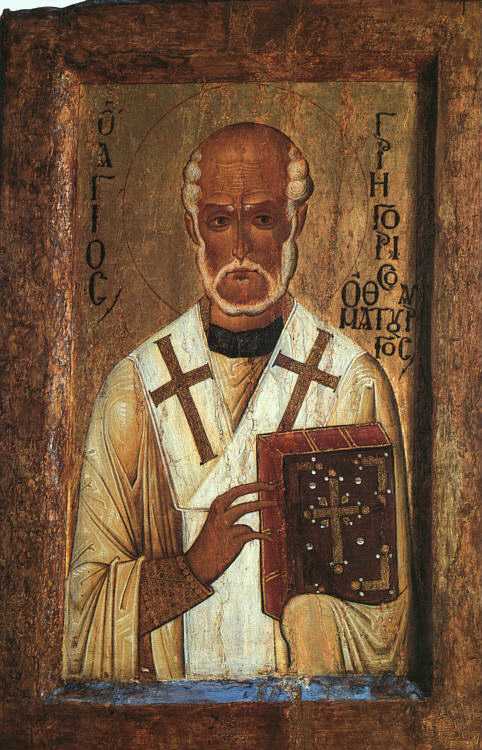
The "physician of souls" is concerned with "the diagnosis and cure of our habits, passions, lives, wills, and whatever else is within us, by banishing from our [body and soul] everything brutal and fierce, and introducing and establishing in their stead what is gentle and dear to God."
- Gregory Nazianzus, Second Oration, 2.16, 18.


I had a recent conversation with Josh about vocation and ordination, so I thought I'd share some of my musings. An excerpt:
Josh: I'm having some difficulty with the title "reverend"
Kyle: Why's that?
Josh: It just seems so...
Kyle: ... I think it suits me
Josh: ... pretentious
Kyle: Like I said
I believe that I have a vocation to the presbyterate. This is something I’ve discerned in and with my community, in the context of a shared life, over the course of several years. I should note that by “my community,” I don’t just mean the Vine and Branches, but also the people who have shared the “Jesus journey” with me over the course of my short life. I very strongly suspect that our Trinitarian god is forming me as a pastor and priest, and has gifted me with the requisite charisms: prophecy, teaching, and “shepherding.” I look after people, and I seek to shape the way my friends look after one another.

I’ve been reading what some of the ancients have to say about such a calling, and I’m batting around the metaphor of “physical therapist in the care of souls.” I might unpack it later, but right now I’m just kind of “tasting” the idea.

Now here’s where it gets really challenging. Let’s say that I do have an honest-to-goodness vocation to the presbyterate, the office of “elder” that’s described in the (English) New Testament. Out there in the world, lots of people who hire and fire people called pastors (despite the rebukes of 1 Clement!) have ideas in their head (shall we call them “job descriptions”?) that are less than spiritual, or biblical, or any good thing you might want them to be. Aspects of this job can include getting bigger temples built, mastering the art of the technologically slick liturgy, making sure everybody’s found “purpose,” and getting more and more strangers to attend to the worship of the community. Never mind the upward mobility inherent to the position for those pastors who are appropriately skilled at it!

This conception, which is at best a poor relation of the “shepherd of the flock of God,” certainly seems ubiquitous in American Christianity. But that doesn’t mean that it is. The pastors who are really religious CEOs or therapists are plentiful, and their sycophantic followers never in short supply. I do, however, have anecdotal evidence for Christian communities that are Christian communities, rather than modernist monstrosities, and for pastors who really are pastors. They make think I could be one. They make me think we really could do this Jesus thing together, and that it really could be redemptive. That this really is what the New Testament is getting at when it keeps accusing Jesus of saving the world.

I’ve faced two temptations regarding this promise.
  • The first has been considered fairly respectable. It would be to say, “All of these random Christians that I don’t even know (and too many that I do) say that being a pastor means xyz, and since I cannot be and do xyz, I am not fitted for nor called to the pastoral office, so I will flee to the academy (because I am called to be a theologian!) and try to live in the orbit of some group of Christians who “get it.” They are out there, after all.
  • The second is patently bizarre, and stems from my affinity for Anglicanism and also accounts for some of the occasional non-comprehension of my friends. I decide that in the midst of post-modern, (sub)urban North America, I can be the parish priest in some rural village, or the noble presbyter of a beleaguered Christian congregation in a city of the 3rd century Roman Empire. This isn’t as ridiculous as it may sound. Think about it: this eschatological community plucks people out of the superstition, materialism, and injustice of the society at large, and lives together as a sign of God’s peace and rule under the shadow of the cross. Schism is taken seriously, biblical and theological literacy are of unquestioned value, and dividing lines are clear. There are shades of their world in ours, and a number of similarities that I find frankly haunting.
These are unsatisfying alternatives:
  • The first option would be honorable, and fulfilling in its way. The problem is that I don’t see it as my call. In the midst of my community, in the life I live with Jesus, the call I sense seems to be different. My passion is rather to learn and teach together with the people of God, but to do this in the context of shaping our common life according to our ongoing discovery of the truth. Teaching at a college or university, or doing this as a layperson in a typical (?) congregation seems just a step removed from where I think I am being formed to stand. There’s something about effectual nature of teaching and guiding in an office that has authority to do those things. And no, I’m not afraid of that word. But still, being a teacher is not to have the cure of souls as such.
  • Second, I live here and now. The challenges are the same, and they are different. The identity of the Christian Church is the same (happily, such things are not decided democratically) and the challenges are very much the same, because – lets be honest – the dividing lines were not so crisp on the other side of the world seventeen hundred years ago, and the things I’d like to imagine were settled, really weren’t. I didn’t train as an historian for nothing.
So what am I going to do? I suppose the same thing that I do now. I’m going to try to be faithful. Maybe I am called to the “platonic form” of the Christian pastorate. And the religious CEO will never be a real pastor. And to be a religious therapist is to be just that. And just because millions of Christians on that silly continent think otherwise, doesn’t make anybody right.

Presbyters are presbyters in the Christian community. People aren’t meant to be priested for kicks, and then left to their own devices. Careerism is no better. Christians need to read theology. They need to know history. They perhaps even should read the Bible, provided that they’re careful with it. Any community to which I joined myself (especially in that capacity) would have to a pretty similar ethos about our life together as the Church. We used to have denominations to put hedges around folk so one could make some basic theological identifications before jumping in. We don’t have that anymore.

But do you know what? Any community that’s being formed together in the likeness of Christ as that sign and foretaste of the reign of God just might have some pretty healthy ideas and practices going on. So I’m going to keep on with the journey, and we’re all going to keep learning to talk about our vocations (“professionally religious” or otherwise) in the context of our reading of scripture, history, and our healthy, healing experiences of Christian community.

Speaking of Right and Reverend, check this out.

Wednesday, July 23, 2003

Superpowers

Many of my friends have a real dislike for flashy, media driven Pentecostalism. You know what I'm talking about: Hagee, Parsley, and others whose messages are manuals of manipulation – simplistic primers in heresy that encourage men and women to approach God as if he were some kind of cosmic bookkeeper who deals in credits and debits and in exchange for our showy spiritual favors will count out blessings in return –twice, and exact to the penny.

These preachers bother me. They hold their flock in dark bondage, and lead some of us outside their circles to reject out of hand any detailed theology of the Spirit’s work in their lives. One of my brothers made a comment to this effect: I just cannot believe that God reaches down and gives us flashy superpowers so that we might impress one another and be entirely irrelevant to the world in which we live. Alright, so that’s not a direct quote, but that’s the idea, and the “superpowers” phrasing has stuck with me for a good week or so.

My friend is absolutely right. But the Holy Spirit really does come and give us superpowers. These powers do not equip us in any way we would have wanted or imagined on our own. It is the way of our dark and fallen world to see power in terms of control, deference, and authority. This is wrong, but a seducing concept because it seems to work so well. We tell ourselves that if only we could be respected, influential, affluent, and loved by everyone, then we would be happy and at peace. This is not true, of course. It would be in that inability to be affected by the dark aspects of humanity that we would be most untouchable and miserable.

Our God has shown us the way of real power in the self-giving love of Christ. His last word regarding our sins is forgiveness. Our master Jesus has faced all of our darkness, weakness, mixed motives and rebellion, and absorbed every last bit of it. There is no manifestation of our fallen condition that has not demonstrated sympathy for by the ministrations of his cross. As his body, the Church continues these ministrations by absorbing sins and giving away his forgiveness: “If you forgive anyone his sins, they are forgiven; if you do not forgive them, they are not forgiven” (John 20:23).

It seems to me that I spend far too much energy in attempts to gloss over my own failures and shortcomings only to find that the image I’ve created is entirely meaningless. If the self I present for the acceptance of other people is not really me – if it is rather an unrealistic depiction of myself as I want others to see me – I cannot gain any real affirmation. I might be able to make people love the image, but they would not be loving me – not from lack of willingness, but because the real me would remain hidden. So many of us create images hoping to be accepted, but wonder why we feel empty when the plan works.

If we are really to be known and loved by others as we truly are, we cannot gloss over the ugly parts of our fallen humanity. This is one of many reasons that members of the Christian community confess their sins to one another: when baptized people exercise their priesthood by speaking prophetic words of correction and tender words of redemption to one another, we shine the light of God’s love and acceptance into the dark places of our lives. In forgiving one another the sins we commit against each other and the community at large, we absorb the brokenness of our sinful humanity in the name of Christ. This is not an easy or glamorous task. It rarely feels warm and fuzzy. But it is a necessary part of redemption, for reconciliation is God’s fervent desire for his people.

In his Return of the Prodigal Son, Henri J.M. Nouwen wrote, “In the context of a compassionate embrace, our brokenness is made beautiful because of the love that surrounds it.” God’s truth is spoken into our lives through the Word, the Spirit, and the Church that he might reveal our brokenness and sin. He does this for our redemption: that we might be healed. This healing is brought about also by the Word, the Spirit, and the Church. Being active in this for one another is a mark of authentic discipleship, a sign of redemption, and a cost of true fraternity.

The Holy Spirit has indeed given us superpowers. They do not work most powerfully by preventing us from sinning, quieting all the rebellion in our hearts, or perfecting our moral lives. This is part of sanctification, but in my mind not the most needful or difficult part. As we are deeply prideful, fallen people, the most exquisite example of supernatural, transformative grace occurs when having sinned, we confess and repent. When we rebel, we turn again, and ask forgiveness. When we fall, we ask God’s mercy, and that of his community. When we can trust in God’s love for us so powerfully that the ugliness we see in ourselves is made an offering rather than being hastily hidden, then we will know that the Holy Spirit has come to us.

Holy Spirit, come in power. May the same power by which God raised up our brother Jesus animate us to walk in new and abundant life, just as he does. Amen.